


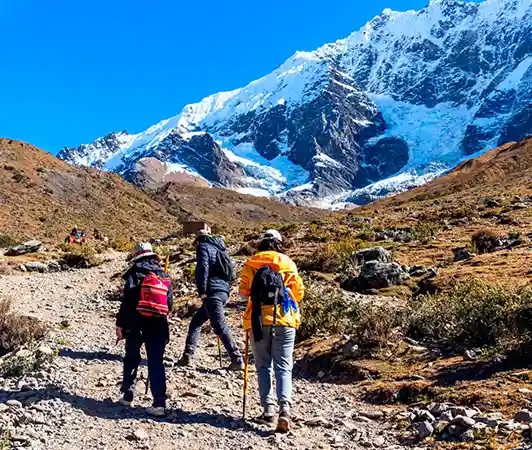
Choosing between the two most popular routes to Machu Picchu is a critical decision for any trekking-focused traveler. This Salkantay Trek vs Inca Trail comparison breaks down key differences in difficulty, scenery, permits, and overall experience to help you select the best option based on your fitness level, expectations, and travel style.
Both treks deliver world-class hiking experiences in the Peruvian Andes, but they target different user intents—one prioritizing heritage and structure, the other adventure and flexibility.
Overview: Salkantay Trek vs Inca Trail
Inca Trail
- Duration: 4 days (classic) or 2 days (short version)
- Max altitude: 4,215 m (Dead Woman’s Pass)
- Core focus: Inca history, archaeology, and cultural immersion
- Arrival: Direct entry through Sun Gate (Inti Punku)
Salkantay Trek
- Duration: 4–5 days
- Max altitude: 4,600 m (Salkantay Pass)
- Core focus: Nature, landscapes, and remote adventure
- Arrival: Aguas Calientes + bus to Machu Picchu
Difficulty Level Comparison
Inca Trail Difficulty
- Moderate difficulty
- Steep stone steps and controlled distances
- Gradual altitude progression
Salkantay Trek Difficulty
- Moderate to challenging
- Higher altitude exposure
- Longer daily distances and rugged terrain
Verdict: The Inca Trail is more suitable for beginners, while Salkantay targets experienced or highly prepared hikers.
Scenery and Landscape Experience
Inca Trail Experience
- Ancient Inca ruins along the route
- Cloud forests and mountain valleys
- Historic stone pathways
Salkantay Trek Experience
- Snow-capped peaks (Salkantay Glacier)
- Glacial lakes and alpine terrain
- Transition from high Andes to jungle ecosystems
Verdict: Salkantay offers more dramatic and diverse landscapes, while the Inca Trail emphasizes cultural and historical value.
Permits and Availability
Inca Trail
- Strict permit system (limited daily entries)
- Must be booked 2–6 months in advance
- Closed in February
Salkantay Trek
- No permit required
- Greater booking flexibility
- Available year-round (weather dependent)
Verdict: Salkantay is significantly more flexible, while the Inca Trail requires long-term planning.
Crowds and Trail Experience
Inca Trail
- Higher demand and shared campsites
- Structured and regulated experience
Salkantay Trek
- Lower crowd density
- More remote and isolated environment
Verdict: Salkantay is ideal for solitude; Inca Trail is more social and organized.
Arrival Experience at Machu Picchu
Inca Trail Arrival
- Entry through Sun Gate (Inti Punku)
- First panoramic view of Machu Picchu at sunrise
Salkantay Trek Arrival
- Arrival via Aguas Calientes
- Standard bus entry to Machu Picchu
Verdict: The Inca Trail delivers the most iconic and immersive arrival experience.
Cost Comparison
Inca Trail Pricing
- Higher cost due to permits and regulation
- Includes logistics, porters, and entry management
Salkantay Trek Pricing
- More budget-friendly
- No permit fees
- Flexible pricing options
Verdict: Salkantay offers better value for budget-conscious travelers.
Which Trek Should You Choose?
- Choose the Inca Trail if:
- You prioritize history and cultural immersion
- You want the classic Machu Picchu route
- You value the Sun Gate arrival experience
- Choose the Salkantay Trek if:
- You want diverse and dramatic landscapes
- You prefer fewer crowds
- You need flexible booking options
Final Decision Factors
- Assess your fitness level realistically
- Plan booking timelines (especially for Inca Trail)
- Prepare for altitude in both routes
- Select a certified and reputable operator
Salkantay vs Inca Trail: Strategic Conclusion
This Salkantay Trek vs Inca Trail comparison shows that both treks deliver high-value experiences but target different segments. The Inca Trail is optimized for cultural depth and structured trekking, while the Salkantay Trek provides a more adventurous, flexible, and scenic alternative.
Align your choice with your fitness level, expectations, and travel intent to ensure the best possible Machu Picchu trekking experience. Contact us to plan your trek.


